The Morning Routine That Supports Healthy Aging Skin
August 2, 2026
A morning routine that truly supports healthy-aging skin isn’t primarily about products. It’s about the sequence of small, deliberate choices that happen between waking and walking out the door — the conditions you create that either support or undermine everything your skincare is trying to do.
What follows is a morning structure built around what mature skin generally benefits from: gentle hydration habits, movement, sun protection, and a calm, repeatable sequence. It can be completed in twenty to thirty minutes, and no single element requires a significant investment.
A thoughtful morning routine supports more than the skin’s surface. It creates the conditions around your skincare — gentle movement, barrier support, consistency, sleep-wake rhythms, and sun protection — that help the routine make sense as a whole.
Before Products: Set the Conditions
Water First
Before coffee, before skincare, many women find it pleasant to start the day with a full glass of water. This is a reasonable general wellness habit — but it’s worth being clear-eyed about what it does and doesn’t do for your skin.
Systemic hydration and skin dryness are not the same thing. Most women don’t wake up meaningfully dehydrated, and there’s no need to treat water timing as a skincare rule. If your skin feels dry or tight, a well-matched moisturizer and attention to your skin barrier will usually do more than adjusting when you drink water.
Two Minutes of Movement
Gentle movement — shoulder rolls, neck stretches, or a short walk — can help the body transition from sleep to activity and often feels genuinely energizing. It’s a reasonable, low-effort part of a healthy morning routine.
It’s worth being realistic about what two minutes of movement can and can’t do: it isn’t a meaningful lymphatic-drainage treatment, and it won’t visibly change facial circulation or reset your stress hormones on its own. Think of it as a gentle wake-up ritual, not a treatment step.
Light and Temperature
Open the curtains or step outside briefly. Natural morning light helps reinforce your circadian rhythm, which can support healthy sleep-wake patterns over time. Adequate sleep, in turn, is associated with normal skin recovery and barrier function — though a few minutes of morning light isn’t a direct, same-day repair mechanism for your skin. It’s a small habit that supports the bigger picture.
Cool, fresh air in the morning can feel like a nice complement to this ritual, simply as part of an alert, pleasant start to the day.
| WONDERING WHAT ELSE MIGHT BE AFFECTING YOUR RESULTS? The free Ageless Glow guide, The 5 Hidden Reasons Your Skin Isn’t Improving After 50, helps you look at the fuller picture around your routine — not just the products themselves. GET THE FREE GUIDE → |
The Skincare Sequence
Cleanse — Gently and Specifically
For many women in midlife, a morning cleanse doesn’t need to be a full, active cleanse. Overnight, the face produces some natural oils but accumulates little true grime. Depending on what you applied the night before and how your skin feels, a gentle low-foam cleanser, a micellar water, or simply rinsing with water can all be reasonable choices — this is genuinely individual rather than a single right answer for every woman.
| KEY PRINCIPLE If your skin feels tight after cleansing, your cleanser is likely removing more than it should. Morning cleansing for mature skin should feel like a refresh, not a reset. |
Vitamin C Serum
A vitamin C serum can be a useful, optional addition to your morning routine. Many women like applying it to clean skin as their first active step. Formulations vary quite a bit, so it’s worth following the directions for your specific product rather than a universal application rule.
Antioxidants like vitamin C may complement your morning routine, but they are not a substitute for daily broad-spectrum sunscreen — the two work best as part of the same routine, not as alternatives to each other.
Eye Cream
If you use an eye cream, apply it gently with a light tapping motion rather than rubbing or tugging — the skin around the eyes is thinner and more delicate than elsewhere on the face. A separate eye cream is optional rather than essential; some women prefer to extend their regular moisturizer to this area instead, and that’s a reasonable choice too.
Moisturizer
Choose a moisturizer based on what your skin actually needs — dryness, sensitivity, your climate, your barrier’s current condition, and your own preference all matter here. Barrier-supportive ingredients like ceramides and fatty acids can be genuinely useful, and richer, more occlusive formulas are not inferior; for many women with dry mature skin, they’re exactly what the skin is asking for.
SPF — A Non-Negotiable Step
Broad-spectrum SPF 30 or higher, every morning, as the final skincare step, remains one of the most important things you can do for your skin’s long-term appearance. Application matters as much as the product itself — aim for even, generous coverage across the face, neck, ears, chest when exposed, and the backs of the hands.
Rather than relying on one household comparison like a “nickel-sized amount,” the more reliable approach is following your specific product’s directions and making sure you’re covering all exposed areas evenly and generously.
The Ritual Most Routines Are Missing
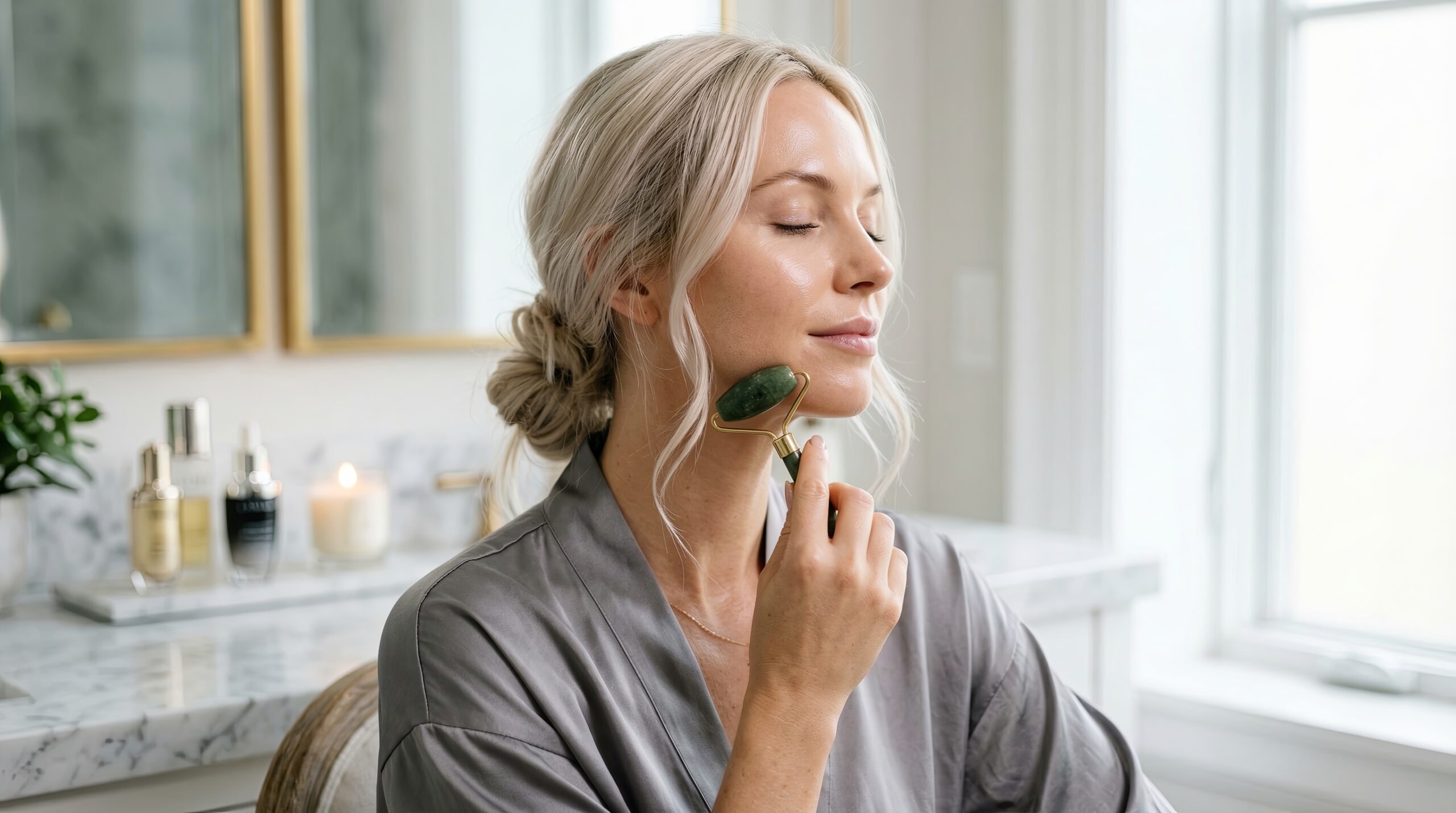
Facial massage. A minute or two of gentle, deliberate touch before or after your first product step can be a genuinely lovely part of a morning ritual — it’s worth including for how it feels, not for a promised transformation.
It’s worth being honest about what facial massage can and can’t do. The evidence for facial massage as a structural, lifting, or significant anti-aging treatment is limited. What it can offer is real, though: a few minutes of relaxation, greater awareness of facial tension, a soothing addition to your skincare ritual, and for some people, a temporary softening in the appearance of mild puffiness.
Use clean fingers, very light pressure, and enough slip from your moisturizer or serum so you’re not dragging the skin. There’s no single correct direction or technique — a gentle sweep from the center of the face outward is a reasonable starting point, but comfort matters more than precision here.
A morning routine that feels calm and unhurried is also, in its own way, caring for your skin. The two are not entirely separate.
| READY FOR A SIMPLER, MORE CONSISTENT ROUTINE? If putting a routine like this together feels like one more thing on your plate, the Ageless Glow Starter Kit can help you build a simple, repeatable morning and evening sequence around products that actually earn their place. EXPLORE THE AGELESS GLOW STARTER KIT → |
The Mindset That Makes It Work
A morning routine works best when it’s protected — when it has a reliable place in your day rather than being the first thing sacrificed to an early email or a rushed morning. A sustainable, ten-minute routine you can actually keep up with will do more for your skin over time than an elaborate, twelve-step routine you abandon within a month.
Consistency is often more useful thn chasing a constantly changing routine.
| GET THE FREE GUIDE If you’d like a deeper guide to building a consistent, sustainable ritual, The 5 Hidden Reasons Your Skin Isn’t Improving After 50 is written specifically for women navigating skin changes in midlife and beyond. GET THE FREE GUIDE → |
Read Next
An Evening Routine to Complement Your Morning Ritual
How to Rebuild a Struggling Skin Barrier After 50 Why Fewer Skincare Products Can Give Mature Skin Better Results
