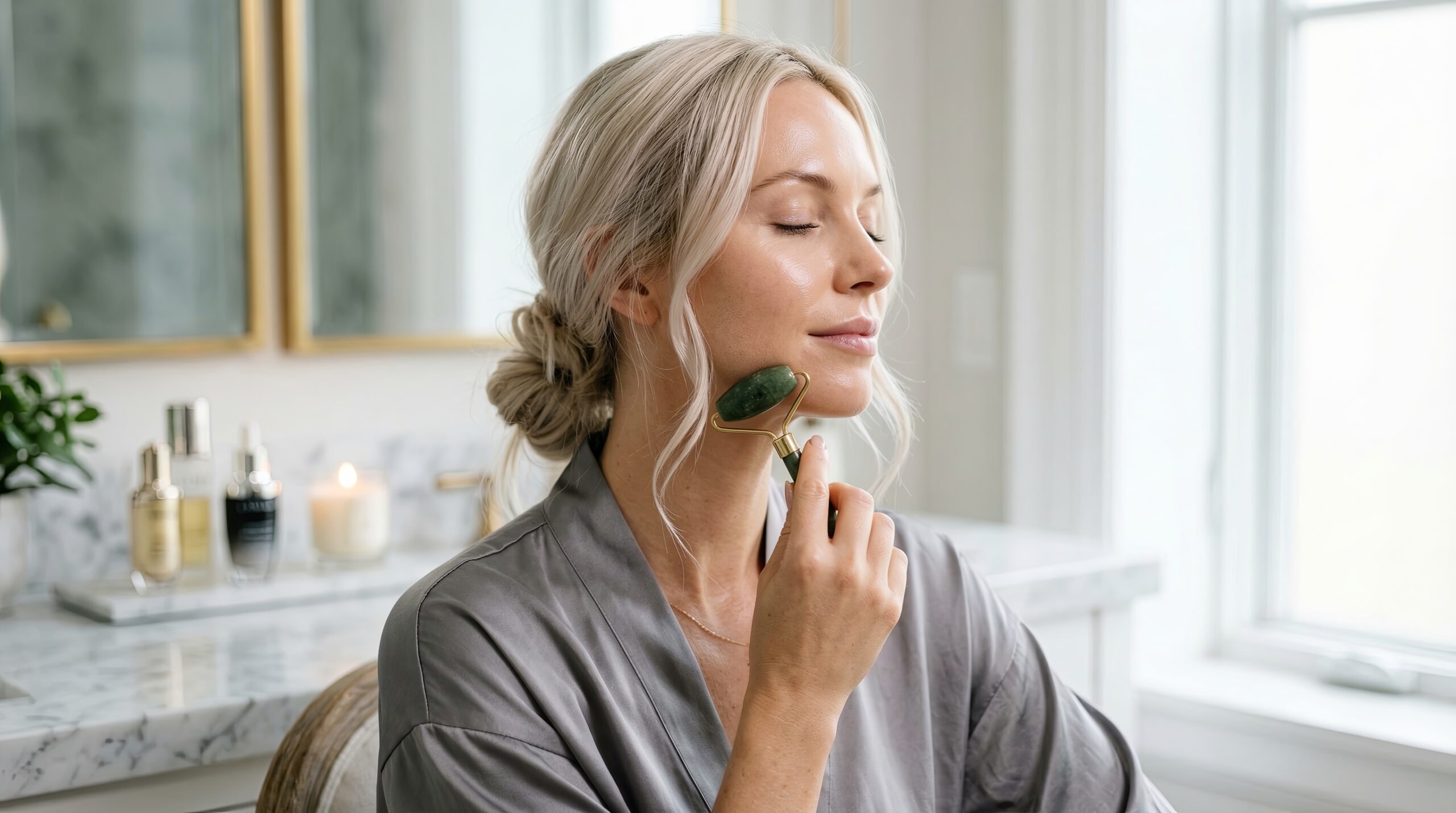
The 5 Hidden Reasons Your Skin Isn’t Improving After 50
July 26, 2026
You have the serums. You have the moisturizer. You are consistent — more or less — and yet the face in the mirror doesn’t seem to be getting the message. If you’re over fifty and feel like your skincare routine has quietly stopped working, you are not imagining it. And you are almost certainly not the problem.
The most common reasons skin stalls after fifty have surprisingly little to do with the products themselves — and much more to do with the conditions surrounding them. Some of these will sound familiar. One or two may genuinely surprise you.
| Using Good Products but Still Not Seeing Better Skin? Get the free Ageless Glow guide, The 5 Hidden Reasons Your Skin Isn’t Improving After 50, and discover the overlooked factors that may be affecting your routine before you buy another product. SEND ME THE FREE GUIDE |
Reason No. 1: You May Be Rotating Products Faster Than Your Skin Can Fairly Respond
Skin renews itself on its own internal cycle, not on a calendar that matches our patience — and that cycle can shift with age, sun exposure, and overall skin condition. How long it reasonably takes to judge whether a product is working varies considerably: it depends on the ingredient, the formulation, your skin’s current state, and what you’re actually hoping to see change.
What tends to happen instead is familiar: a new serum goes viral, a friend raves about a different cream, or a few weeks in we quietly decide a product “isn’t working” and move on to the next one — restarting the clock before it ever had a fair trial.
The result is a skincare cabinet full of perfectly good products that were never given enough time, and a routine that never holds still long enough to actually be evaluated.
THE SHIFT: Choose one core routine and give it a genuinely fair, consistent trial before judging it — no new additions, no switching. Consistency gives you a much clearer opportunity to evaluate what your mature-skin routine is actually doing.
Reason No. 2: Ongoing Stress May Be Quietly Working Against Your Routine
Chronic psychological stress doesn’t stay contained to how you feel — it may also affect skin-barrier function, inflammation-related processes in the body, the quality of your sleep, and, just as importantly, the consistency of your own self-care. A stressful stretch is rarely just about mood; it’s often when routines quietly slip, water intake drops, and sleep gets shorter, all at once.
What’s rarely mentioned is where so much of that ordinary stress actually comes from: a cluttered counter, an overflowing inbox, a home that feels like it’s managing you instead of the other way around. The low hum of daily stress can matter too, especially when it begins affecting sleep, routines, and the way you care for yourself.
This is the real reason a calm, ordered environment isn’t just a lifestyle preference. It’s part of the conditions your skincare routine is operating within.
THE SHIFT: Pick one small, contained space — a bathroom shelf, a kitchen counter — and reset it today. A calmer environment supports a calmer nervous system, and that’s part of the picture too.
Reason No. 3: Skincare Products Work Within the Context of Your Overall Health — Not Independently From It
A topical product works on the outermost layers of skin. But skin is also built and maintained from the inside, using the protein, healthy fats, and hydration your body receives daily. Topical moisturization and systemic hydration are related, but they are not the same thing — and no serum, however advanced, can fully compensate for a body that is consistently under-hydrated or under-nourished.
After fifty, this context matters even more. Collagen production naturally becomes less robust with age, and the everyday nutrients that support skin — adequate protein, vitamin C, essential fats, and zinc among them — deserve real attention, not as a cosmetic fix, but as part of the broader picture your skin is responding to.
Many women who feel their skincare has “stopped working” haven’t changed their routine at all. Their hydration and nutrition have simply quietly slipped, and their skin, along with the rest of the body, is reflecting it.
| THE AGELESS GLOW SHIFT Before adding another product, ask whether the routine around your skincare is supporting the result you want. Sometimes the next step is not more skincare. It is a better foundation. |
| Need a Calmer Way to Sort Out Your Routine? If you are realizing that your skin may need more than another product, the Ageless Glow Starter Kit was created to help you step back, evaluate what you already own, and build a simpler morning and evening routine around what your skin actually needs. EXPLORE THE AGELESS GLOW STARTER KIT |
Reason No. 4: Your Sleep Environment Is Part of Your Skincare Routine, Whether You’ve Thought of It That Way or Not
Sleep quality and your body’s natural circadian rhythms are associated with normal skin recovery and barrier function. This doesn’t mean every bit of repair happens exclusively overnight, or only during the deepest stage of sleep — but poor-quality, fragmented, or insufficient sleep can genuinely affect how skin looks and feels, in ways that show up independently of whatever is sitting on your bathroom shelf.
A bedroom that is too warm, too bright, filled with screens and notifications, or simply not associated with rest can interfere with sleep quality — even if you are technically spending enough hours in bed.
Your sleep environment is part of the broader healthy-aging picture your skin exists within, not a separate concern from it.
THE SHIFT: Make one change tonight — lower the temperature slightly, dim the lights an hour before bed, or move your phone outside the bedroom. Small environmental shifts compound over time.
Reason No. 5: You May Not Have an Objective Way to See the Progress That’s Already Happening
Skin improvement is gradual almost by definition, and gradual change is genuinely difficult to perceive when you see your own face every single day. The shifts that matter most often happen well before they’re visible enough to notice at a glance in a mirror you look into constantly.
This creates a quiet trap: it’s easy to give up on a routine before it’s had a fair chance, simply because day-to-day change is so hard to detect by eye alone. Without a more objective way to track progress, it can be nearly impossible to tell the difference between “this isn’t working” and “this is working, but I genuinely can’t see it day to day.”
You may not be failing. You may simply be missing a way to see what’s already underway.
THE SHIFT: Take one photo, in the same light, today. Take another in a few weeks. Resist judging either one alone — the comparison, done consistently over time, is where the real story tends to be.
The Common Thread
Look closely at these five reasons and a pattern emerges. None of them are really about the product itself. They’re about the conditions the product is operating within — how long it’s given, what’s happening in your nervous system, how your body is being fed and hydrated, how well you’re sleeping, and whether you have any real way to see the results that are already quietly forming.
Healthy-looking skin is rarely the result of one perfect serum. It is usually the result of several supportive habits working together, consistently, over time. That’s not a more complicated answer than “buy a better product” — in many ways, it’s a calmer, more achievable one.
You May Not Need More Products. You May Need a Better System.
None of the five reasons above are about willpower, and none of them require a single new purchase. They’re about building a small, sustainable system around the products you already own — a steadier ritual, a calmer environment, a better-nourished body, a more restful bedroom, and a simple way to actually see your own progress. If your skin is already feeling tight, reactive, or easily irritated, it’s worth starting with our guide to rebuilding a struggling skin barrier after 50 before introducing anything new.
And if the stress-and-clutter connection in Reason No. 2 resonated, our article on the cortisol-clutter connection goes further into why a calmer home is genuinely part of a skincare strategy, not separate from one.
Before You Buy Another Product…
If your routine feels like it should be working but your skin still isn’t responding the way you expected, start by looking beyond the next serum.
The free Ageless Glow guide, The 5 Hidden Reasons Your Skin Isn’t Improving After 50, will help you identify the overlooked factors that may be affecting your results — and show you where to focus first.
GET THE FREE GUIDE — https://agelessglowskincare.com/5-reasons
READ NEXT
→ The Mature-Skin Ingredient Guide: What Helps, What Irritates, and What to Use Carefully
→ Why Fewer Skincare Products Can Give Mature Skin Better Results
