LED Light Therapy After 40: An Honest Guide
September 2, 2026
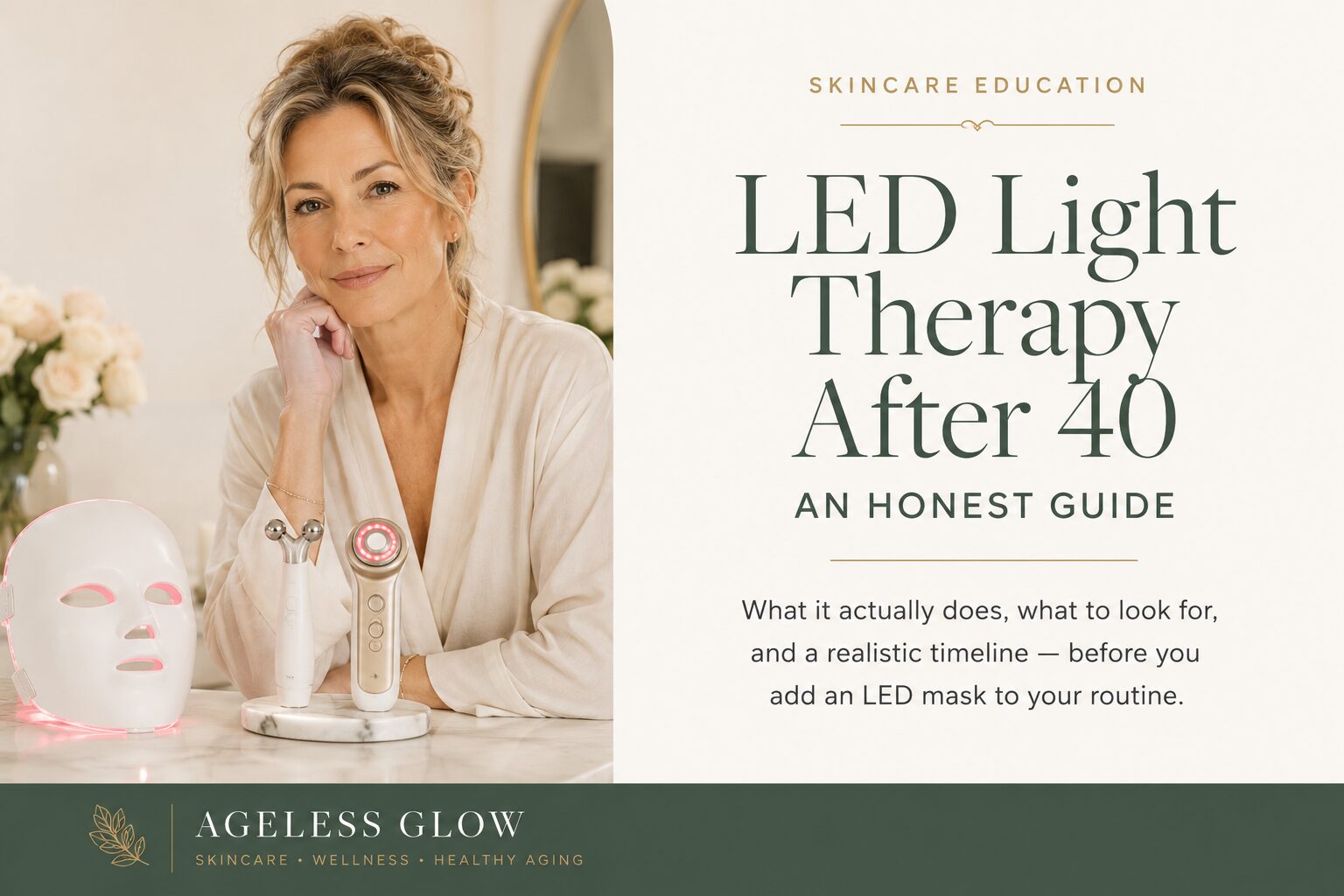
If you’ve spent any time on Pinterest or Instagram lately, you’ve likely seen an LED mask — that glowing, slightly futuristic-looking device promising brighter, calmer, more radiant skin. Before you add one to your routine, it’s worth understanding what the light is actually doing, what a realistic timeline looks like, and how to know if it’s a good fit for you specifically.
What LED Light Therapy Actually Does
At-home LED devices work by exposing skin to specific wavelengths of light, most often within the red and near-infrared ranges. Red light is generally associated with supporting tone and the appearance of fine lines, while near-infrared light is thought to reach slightly deeper and is often paired with red light for a more complete session.
Exact wavelength specifications vary from device to device — there isn’t one single combination required for a device to be legitimate. What matters most is that the manufacturer clearly discloses the specific wavelengths used and the device’s intended use, so you know what you’re actually buying.
The light is thought to support the skin’s own cellular activity — it isn’t a drug or a peel, and results tend to be gradual rather than dramatic.
It’s worth being skeptical of any product claiming to be the single best option on the market, or the one “correct” wavelength combination. Different skin types and concerns respond differently, and what matters most is choosing a device with real, disclosed specifications you can verify, not just an appealing photo.
The evidence is promising but still limited and device-specific. Some controlled studies of specific red and near-infrared LED devices have reported small improvements in the look of fine lines and skin texture with consistent use. At-home devices generally deliver less light energy than professional equipment, though, and what is true of one device or protocol doesn’t automatically apply to another.
What the Research Supports, and What Is Still Marketing
Red light therapy attracts big claims, so it helps to sort them by how much is actually known.
- Promising, but still limited. The best evidence comes from controlled studies of specific devices and protocols, and the improvements reported are small.
- Not well established. Evidence for at-home devices is thin for concerns such as acne and pigmentation, and studies of consumer devices show wide differences in the light they deliver.
- Manufacturer claims. Percentages and phrases like “clinically proven” come from marketing. Ask who ran the study, on which device, and whether it included a comparison group.
- Personal experience. Stories are worth hearing, but they can’t tell you what will happen for your skin.
A few myths are worth setting aside. At-home masks are not the same as professional treatments; they generally deliver less light energy. Using a device more often or for longer is not a shortcut, so follow the manufacturer’s schedule. There is no single “correct” wavelength. And “FDA-cleared” does not mean proven, as explained below.
Is It Right for You After 40?
For most healthy adults, at-home LED therapy is generally regarded as low-risk when it is used as the manufacturer directs, but it isn’t automatically right for everyone. If you take a medication that makes your skin more sensitive to light, are pregnant, have melasma or other pigmentation concerns, or are managing an active skin condition, it’s worth a conversation with your doctor or dermatologist first. This isn’t something to guess your way through.
The American Academy of Dermatology also advises talking with a dermatologist first if you have a deeper skin tone, because people with deeper skin tones are more sensitive to visible light, which can lead to dark spots that are more intense and longer-lasting.
Eye protection is worth taking seriously. Instructions differ from one device to the next, so follow your manufacturer’s guidance on eye protection rather than assuming one rule fits every LED product.
How to Choose an At-Home LED Device
There isn’t one best device, and a higher price doesn’t guarantee a better one. If you are also weighing LED against other kinds of at-home devices, my guide to at-home skincare devices explains what each can realistically do.
For LED, these are the questions that separate a transparent product from an appealing photo.
- Disclosed wavelengths and intended use. The manufacturer should say which wavelengths the device uses and what it is meant to do.
- Evidence for this device. Research on red light in general isn’t the same as research on this product. Look for testing of the specific device, and notice who ran and paid for it.
- Clear directions. Session length, frequency and eye-protection instructions should be easy to find and easy to follow.
- Regulatory status, described plainly. See the next section.
- Fit for your life. Coverage, comfort and weight matter, because a device you don’t use can’t help you.
- Support and returns. A company that stands behind a fair trial is easier to trust.
What “FDA-Cleared” Does and Doesn’t Tell You
You’ll often see “FDA-cleared” on an LED device, and the phrase is easy to misread. A 510(k) clearance means the FDA found a device substantially equivalent to one already legally on the market, for a specific intended use. That is a finding of equivalence, not of specific results. It is also not the same as FDA approval (called premarket approval, or PMA), a more demanding pathway generally used for the highest-risk devices, where the manufacturer must show reasonable assurance of safety and effectiveness. “FDA registered” is different again: the FDA states that registering a company or listing a device does not denote approval. Whatever phrase you see, look for the specific use the device was cleared for.
Want a quiet reference to keep beside you? My free guide, 5 Things Nobody Tells You Before You Buy an LED Mask, covers the wavelengths that matter, a realistic results timeline, why more isn’t better, what LED can’t do alone, and how to track your progress.
Five Questions to Ask Before Your First Session
Before you begin, it helps to be able to answer these five questions:
- Is LED right for my skin and health situation, or should I check with my doctor or dermatologist first?
- Does the manufacturer clearly state the wavelengths and what the device is meant to do?
- What are this device’s instructions for eye protection, session length and frequency?
- What is its regulatory status, and for which specific use?
- Can I follow the schedule long enough for a fair trial, and how will I track my progress?
A Realistic Timeline
Marketing photos often suggest instant transformation. In practice, LED results tend to be gradual, and are usually best evaluated over a consistent trial — typically several weeks to a few months — following the schedule your specific device recommends.
Exactly how long it takes to notice a difference varies by device, treatment frequency, the concern you’re addressing, and individual skin response; there isn’t one universal timeline that applies to everyone.
If you compare photos to judge progress, the lighting you use changes what you see, so keep it consistent. This guide to judging your skin under consistent lighting explains why.
Getting the Most From It
An LED mask works best as a support to your existing routine, not a replacement for it. Keep your cleansing, moisturizing, and sun protection consistent, follow the manufacturer’s recommended frequency rather than improvising your own schedule, and give it a genuine, tracked trial before deciding whether it’s earned a permanent place in your routine.
For the most common ways an LED routine goes off track, see 5 LED Mask Mistakes That are Wasting Your Time (and Money).
Common Questions About LED Light Therapy After 40
Does LED light therapy work after 40? It may help with the appearance of fine lines and overall skin quality. The evidence is promising but still limited, and it is specific to particular devices and protocols. It works best as consistent, patient support for your routine, not as a replacement for sun protection or medical care, and results tend to be gradual.
Is LED light therapy safe? For most healthy adults it is generally regarded as low-risk when used as directed. Follow your device’s eye-protection instructions, and check with your doctor or dermatologist first if you take medications that increase light sensitivity, are pregnant, have melasma or pigmentation concerns, have a deeper skin tone, or have an active skin condition.
How long until I notice a difference? Usually several weeks to a few months of consistent use, following your device’s schedule. It varies with the device, how often you use it, and your skin.
If you’d like a plain-language reference before you decide, my free guide, 5 Things Nobody Tells You Before You Buy an LED Mask, is a good place to start.
Sources: the FDA consumer update on the difference between clearance, approval and registration; a May 2026 Dermatology Times review of at-home red light and LED devices; and the American Academy of Dermatology’s guidance on red light therapy.
Read Next
